
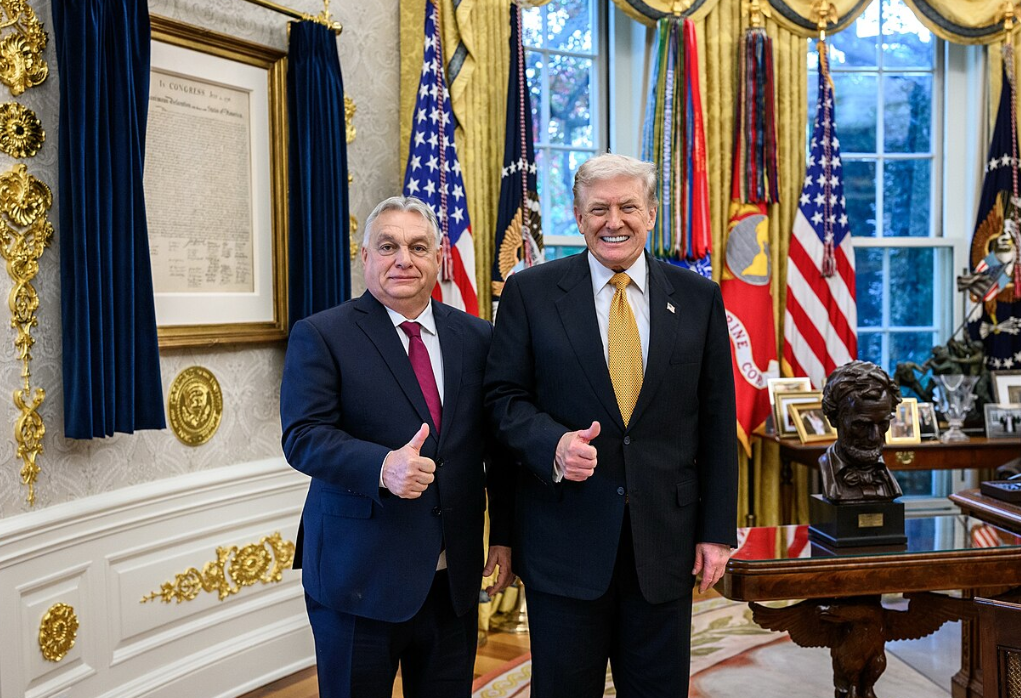
When Viktor Orbán lost Hungary's election in April, the European establishment cheered. Brussels had spent 16 years trying to get rid of him, and he was finally out of power.
Six months later, the Trump administration wants him running the United Nations.
According to sources in three countries, U.S. officials have been urging the former Hungarian prime minister to run for UN Secretary-General. One American official called him the "dream MAGA-conservative candidate." An official from another country compared him with the rest of the field, which he said is "heavy on 'secretary.'" Orbán, he said, would be a "general."
The surprise is who else is reportedly on board: Russia and China.
A State Department official admitted the idea "sounds crazy at first." But in earlier conversations with Washington, both Moscow and Beijing signaled support, and the plan is for Orbán to be a joint candidate of all three countries. The official counted eight of the 15 Security Council votes as "comfortably" in Orbán's column, with ten within reach. He needs nine.
If it works, Trump will have gotten two of America's biggest rivals to help install a pro-American, anti-globalist Secretary-General.
Any of the five permanent members of the Security Council can veto a candidate: the U.S., Russia, China, Britain, and France. When the first three agree on something, it usually happens. With Washington, Moscow, and Beijing behind the same man, three of the five vetoes are already off the table. António Guterres's second and final term ends December 31.
Trump has never hidden his admiration for Orbán. He hosted him at the White House last November. Before Hungary's election, he gave Orbán his "Complete and Total Endorsement," calling him "a true friend, fighter, and WINNER." Now he wants to his friend to have a much more impactful job.
It's easy to see why. For 16 years as prime minister, Orbán did what the European Union told him not to do. When Brussels wanted migrants spread across Europe under a quota system, he refused. When the approved answer to the 2015 migrant crisis was to open the doors, he built a fence. He went after left-wing NGOs and took on activist courts, and he kept winning elections until this spring.
A State Department official said Orbán has the right ideology, knows how to govern under hostile conditions, and "won't be cowed by the establishment."
That's what the Trump administration wants at the UN. The organization has spent years pushing migration compacts, climate mandates, and global health rules on countries whose voters never chose any of it. At the General Assembly last year, Trump accused the UN of "funding an assault on Western countries and their borders." America pays the UN's biggest bill, more than a fifth of its regular budget.
Russia and China have their own reasons to like him. Orbán opposed EU sanctions on Russia and blocked a €90 billion EU loan to Ukraine. He also made Hungary the first EU country to join China's Belt and Road program and welcomed Chinese electric-vehicle and battery plants.
But the main reason is that all three countries want the same thing from the UN, even if their motives differ. They want it to stay out of their internal affairs. Washington wants the UN to stop dictating migration and climate policy to Americans. Moscow and Beijing want it to stop lecturing them on human rights. Orbán built his career on the idea that nations decide for themselves, and that's the one thing all three can agree on.
It isn't a done deal. Britain and France could still veto him, and he needs a country willing to formally nominate him. Costa Rica's Rebeca Grynspan led the Security Council's first informal straw poll over the summer. Orbán reportedly only wants in if he's sure to win.
If he does run, the announcement is expected after the midterms. Guterres's term ends December 31.