
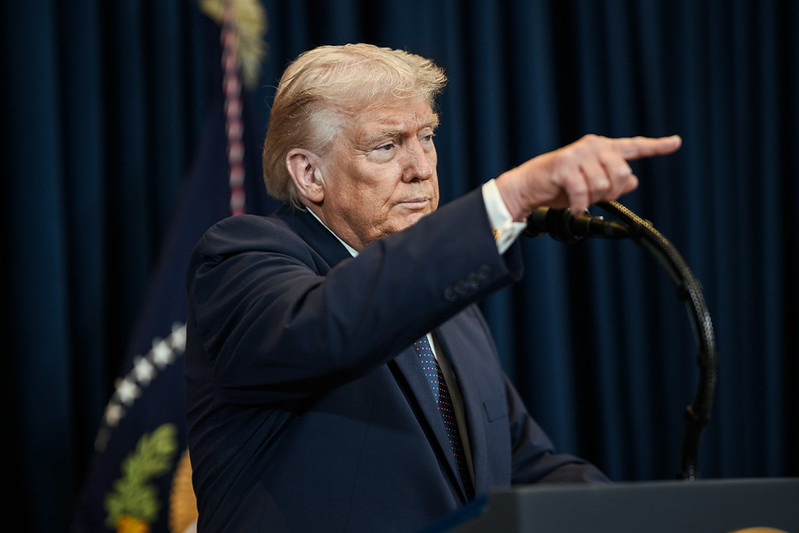
President Trump sat in the Oval Office on Monday and told reporters, flatly, "We have jihadists being elected all over the place." He paused. Then: "You know, really, you should use the word jihadist because that's what's happening."
The White House press corps treated it like a grenade.
Trump's comments came as part of a broader midterm offensive, three months before the November elections, in which he has systematically tied the Democratic Party to its most radical nominees. He pointed specifically to candidates "from countries that are not great" — naming Somalia as an example — and connected the primary results to the platform of the Democratic Socialists of America, which calls for abolishing the presidency, the Senate, the Supreme Court, ICE, and prisons, plus mass amnesty and defunding the Pentagon.
"Let's get rid of the Supreme Court, let's get rid of the presidency, let's get rid of the Senate," Trump said, summarizing the DSA platform. Then, with the timing of a man who's been doing this for a decade: "I'd like to get rid of the Senate too, but I don't say it, and I wouldn't do it."
The specific case looming behind the remarks is Abdul El-Sayed — full name Abdulrahman Mohamed El-Sayed — the Democratic nominee for Michigan's open Senate seat. El-Sayed would be the first Muslim elected to the U.S. Senate. Trump posted side-by-side photos on Truth Social over the weekend comparing himself and First Lady Melania Trump with El-Sayed and his wife.
El-Sayed responded Sunday on CNN's "State of the Union," describing the current political landscape as "one in which your overlords are two people who don't like each other but join in the interest of making billions." He contrasted that with a photo of himself and his wife: "Two people who genuinely love each other, enjoyed some pancakes together."
Pancakes notwithstanding, Trump's broader point isn't about one candidate. It's about a pattern. DSA official Francis Gill went on TV and confirmed, on camera, that the party platform includes abolishing the presidency, the Senate, the Supreme Court, ICE, and prisons. But what was worse was her answer when asked what she'd do with rapists if she doesn't believe in prisons. You can watch the DSA answer to handling rapists here...
That's the environment producing Democratic nominees in 2026. New York City elected DSA-backed Zohran Mamdani as mayor. Michigan's about to send El-Sayed to the Senate primary. The DSA platform is no longer a fringe document — it's a candidate pipeline.
Trump framed this as an electoral advantage. "People don't want to have radical lunatics involved in running our country," he said. "I think that they start off with a big disadvantage."
Left-wing outlets spent Monday calling the "jihadist" language dangerous, inflammatory, and Islamophobic. Which is an interesting objection when the actual policy positions of the candidates in question include dismantling three branches of government and abolishing federal law enforcement. The word choice is doing all the work in their rebuttal because the substance — the DSA platform, the primary results, the nominee roster — doesn't offer them much to work with.
Trump didn't invent the radicalism in the Democratic primary electorate, but he is one of the only ones calling out the party.