
On the morning of February 10, an 18-year-old sat in a parked car in Tumbler Ridge, British Columbia, holding a rifle. The mother and 11-year-old stepbrother inside the house were already dead.
The shooter typed out a message: "I'm going now. Fr. Live. I shot them. F---."
Hundreds of miles away in Bellingham, Washington, the person on the other end replied: "Watching now."
Then came a problem. The shooter didn't know how to drive. "I can't figure out how to start the car help."
The answer came back: "F---. Stream down. Turn the key til it sounds like its going enough then stop."
"It's push to start."
"Button? Hold it a lil maybe??"
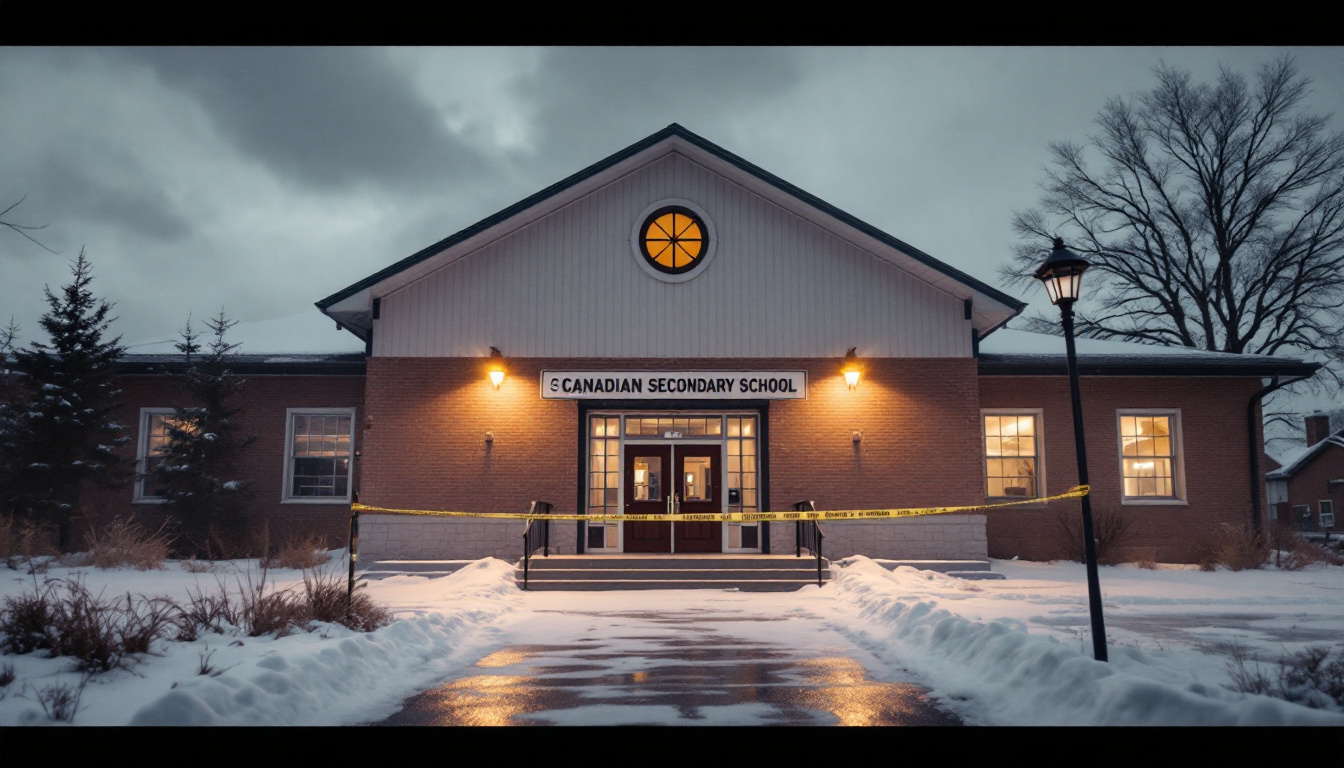
The car started. A neighbor watched it crash into a snowbank, recover and head toward Tumbler Ridge Secondary School. Five children, ages 12 and 13, died there, along with an educational assistant. About two dozen more people were wounded.
The man who talked the killer through starting the car is James Cody Bryant, 30, a biological male who identifies as a woman and goes by "Mel." The FBI arrested him in Bellingham on October 6. He is charged with conspiracy to murder persons in a foreign country, which carries a maximum of life in federal prison.
The shooter, Jesse Van Rootselaar, was also a biological male who identified as female. Canadian police said Van Rootselaar began transitioning about six years before the attack. Messages in the FBI's 41-page criminal complaint show the two talked about it openly. Van Rootselaar wondered whether people watching the livestream would ask "did they do vocal training yet or not?" and admitted not having done it yet. Van Rootselaar mentioned not wanting a parent to see Bryant's "deadname." The cell phone holder the shooter wore during the attack carried an upside-down Pride flag. "The upside down pride flag kinda gives the vibe that it's in distress," Van Rootselaar wrote the day before the shooting.
Bryant's reply about the plan to keep quiet on the livestream was: "No lasting evidence of your voice, just a pretty girl gunning ppl down."
According to the complaint, the two met online about three years ago and spoke almost daily in the six months before the massacre. Van Rootselaar was institutionalized twice during that time, the second time after setting a bedroom on fire. Van Rootselaar described stealing guns and ammunition from the family gun safe and hiding them for a mass shooting. In one message, Van Rootselaar complained that police had knocked the SKS rifle's sights off "when they roughly confiscated it." By December, that rifle was back in the shooter's hands.
Bryant knew all of it, and he kept helping.
In August 2025, Van Rootselaar studied Canada's deadliest school shooting, the 1989 École Polytechnique massacre that killed 14, and talked about beating that number. Bryant offered advice: "Hallways also mean a lot of ways people can escape. Corners to turn. Wide open spaces means numbers."
When the shooter planned to bring three or four guns, Bryant said there "should have a handgun." When Van Rootselaar wrote, "I can cause a lot of damage this way," Bryant answered, "yeah you've got solid plans."
When Van Rootselaar couldn't decide whether to wear a real suicide vest or a fake one for intimidation, Bryant voted for real. "Function over form imo. As long as it works it's good."
The complaint also says Bryant paid for parts of the attack. On November 21, he sent $124.47 over PayPal with the message "Happy late birthday." The money was for a pair of shoes the shooter planned to wear during the massacre. "Plus I want the cute shoes for when I do my violence," Van Rootselaar wrote. Video from the school shows the shooter wearing them. Bryant also chipped in for stickers to decorate the guns. "[] stickers would be so funny to be seen in photos of the incident," he wrote.
On January 25, three weeks before the attack, Van Rootselaar showed Bryant a homemade incendiary device packed with shotgun shells and an improvised rocket-fuel mixture, then asked for money for a lighter to set it off. Bryant sent $14.33. PayPal reversed it because the shooter's account had been shut down, so Bryant offered to try Apple Pay instead. "Literally giving you access to my card," he wrote. At the school, Van Rootselaar lit that same device and threw it near the library and computer room.
The livestream was Bryant's main job. Van Rootselaar wanted the massacre recorded and spread so widely "it cannot be censored," like the Christchurch and Buffalo videos. Bryant agreed to screen-record it and post it. He helped test the feed on August 30 ("looks solid") and again on January 5, when Van Rootselaar wore the camera rig and Bryant confirmed, "It works. I saw your lighter." He suggested a Starlink dish for a better connection. He talked about getting a VPN because "Idk if I'd get in trouble posting a shooting video online." He suggested they "find a way to delete all our messages."
The day before the attack, Van Rootselaar asked whether Bryant would really be there. "I literally fixed my sleep schedule to help me stay up to be there after work," Bryant answered. "I will. I'll be there."
He was. Twitch records show the 20-second livestream got one viewer, and that account was registered to Bryant.
He also understood he could have stopped it. "I know I can like, save lives I guess but idk," he wrote in August. Two weeks later he wrote, "I might be the only one who can at this point." He promised again and again that he wouldn't "snitch." He called the decision a "trolly problem." When Van Rootselaar asked whether he'd keep quiet even about something "that would get me charged with terrorism," Bryant replied: "I still won't snitch."
At times Bryant told Van Rootselaar to postpone. He told agents he had steered the shooter away from a school, toward "a grocery store or a church" instead. On January 6, Van Rootselaar said the target might be the old high school in town. Bryant answered: "People die no matter what." On January 4, he spent a conversation urging the shooter to reconsider, and by the end of it he was helping test the livestream again.
"He had the information and ability to alert law enforcement," said Neal Floyd, acting U.S. Attorney for the Western District of Washington. "He chose not to. Instead, he encouraged and offered assistance to a murderer." Mike Herrington of the FBI's Seattle Field Office said Bryant "even stayed awake after an overnight work shift to make sure this horrific act could be widely viewed online."
Discord flagged the conversations to Canadian police right after the shooting. Homeland Security agents questioned Bryant in Bellingham two days after the massacre, and the FBI interviewed him again on March 3. By then the messages were gone from his phone, and he refused to let Discord hand them over. Agents got them with a search warrant.
Much of the coverage has been less forthcoming. It reports the legal name, the charge and the livestream. You have to dig to learn that the accused and the shooter were both trans-identified males, or about the upside-down Pride flag on the camera rig. The Covenant School shooting in Nashville went the same way. The shooter was trans-identified, and the story faded quickly.
Bryant made his first appearance in federal court in Seattle. In the messages, he said what he expected the shooter would leave behind: "just a pretty girl gunning ppl down."