
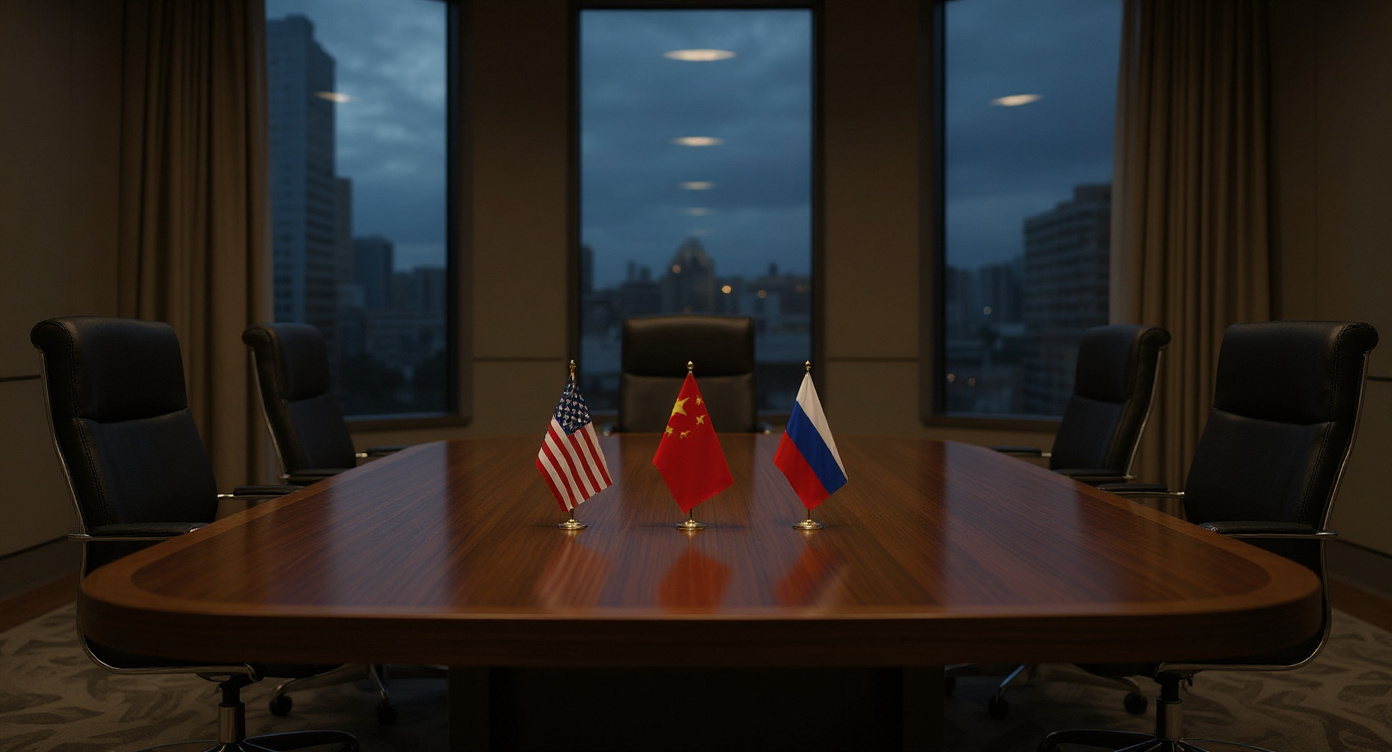
The last nuclear arms control treaty between the United States and Russia expired in February 2026. Nine months of nothing followed — no framework, no talks, no pathway back to the table. Three nuclear arsenals, zero agreements governing them.
Then Donald Trump picked up the phone.
The White House confirmed Thursday that President Trump will meet with both Chinese President Xi Jinping and Russian President Vladimir Putin in Shenzhen, China for what officials are calling the first trilateral nuclear summit in history. Not bilateral. Not a sideline chat at the U.N. A three-way, sit-down meeting between the leaders of every major nuclear power on the planet, scheduled for Thursday of this week.
White House spokeswoman Olivia Wales framed the stakes plainly: "This proliferation, President Trump believes, is very dangerous." A senior U.S. official described the meeting as "the entry point, the first conversation, certainly at the leader level, between these countries" on nuclear weapons.
Trump is attending the ASEAN summit in the Philippines on Tuesday before traveling to Shenzhen on Wednesday. The Kremlin has confirmed Putin's participation. China has not made a formal announcement, though the meeting is set for Chinese soil — which tells you what you need to know about Beijing's involvement.
Officials were clear that no agreement is expected from the initial meeting. This is the opening of a channel that hasn't existed before. Previous arms treaties were strictly U.S.-Russia affairs. China refused to participate, maintaining that its arsenal was too small to warrant inclusion. Trump proposed a broader multilateral framework during his first term. It went nowhere then. It's happening now.
This is Trump's fourth meeting with Xi since returning to office in January 2025. The relationship has produced tariff negotiations, fentanyl cooperation commitments, and now a venue for nuclear talks that no previous president — of either party — managed to arrange. Getting China to the table on nuclear arms was considered a diplomatic impossibility by most of the foreign policy establishment. The word "unprecedented" gets thrown around cheaply in Washington. This time it's accurate.
Ukrainian President Volodymyr Zelensky expressed concern about decisions affecting Ukraine being made without Kyiv's involvement. Whether Ukraine is on the formal agenda remains unclear — officials noted the central focus is nuclear disarmament and proliferation, with Iran also on the discussion list.
The foreign policy class spent four years insisting Trump's approach to Russia and China would destabilize the global order. The bilateral treaties lapsed. The multilateral frameworks never materialized. The "adults in the room" produced nine months of diplomatic silence on the most consequential weapons question on Earth.
Three presidents. One table. Shenzhen, Thursday.