
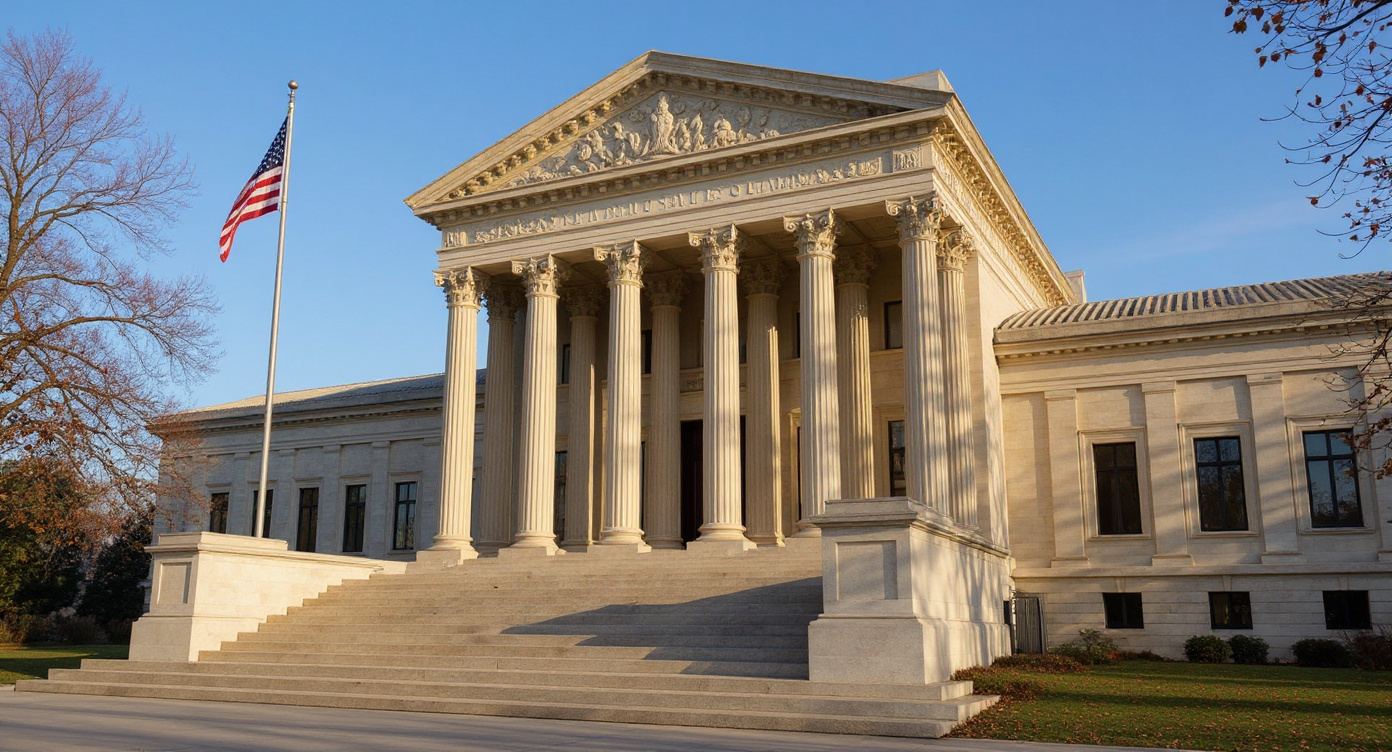
Gwynne Wilcox spent twenty months fighting to keep a job the President of the United States told her she no longer had. On October 19th, the Supreme Court declined to hear her appeal, ending the last legal challenge to Trump's authority to fire Biden-era appointees from independent agencies.
Wilcox, a member of the National Labor Relations Board appointed by Joe Biden, was dismissed one week into Trump's second term in January 2025. She sued immediately, and U.S. District Judge Beryl Howell ruled that Trump had unlawfully removed her — a decision that briefly gave the resistance its latest constitutional hero.
That ruling survived exactly nine months. In December 2025, an appeals court overturned Howell's decision in a 2-1 ruling, finding the President did in fact have the authority to remove appointees from independent agencies. The legal foundation Wilcox had been standing on was already cracking.
Then came June 2026. The Supreme Court ruled 6-3 in a separate case involving Rebecca Slaughter, a Biden appointee removed from the Federal Trade Commission, that the President's removal authority extends to independent regulatory agencies. That decision overturned Humphrey's Executor v. United States, a 1935 precedent that had shielded agency heads from presidential firing power for nearly a century.
Ninety-one years of bureaucratic armor, gone in one ruling.
With the Slaughter precedent on the books, Wilcox's case was already dead on arrival at the Supreme Court. The justices didn't even need to hear arguments — they simply declined the appeal. Wilcox responded that she was "disappointed that the Supreme Court has declined to hear this case, not only for myself, but also for the workers and employers who rely on the National Labor Relations Board."
The framing is revealing. Not disappointed for herself and the legal principle she claimed to be defending. For "workers and employers who rely on the NLRB." The agency that existed before she got there and will continue to exist after she's gone. The building doesn't need her. The mission doesn't need her. The President decided the American people don't need her in that chair, and three levels of the federal judiciary agreed.
The Justice Department argued throughout the case that for-cause removal protections on agency heads violated the separation of powers — that a President who can't fire the people running executive functions isn't really running the executive branch. The Supreme Court, twice now, has said that's correct.
What Humphrey's Executor created in 1935 was a class of federal officials who answered to no one who could be voted out of office. They served fixed terms, could only be removed "for cause," and operated with the full force of federal law behind their decisions. The 6-3 ruling in the Slaughter case didn't just help Trump. It returned a structural check to the constitutional design — the President hires, the President fires, and the voters decide whether the President stays.
Wilcox's appeal was the last one in the pipeline. No more Biden-era holdouts have pending removal challenges before the courts. The legal question that consumed twenty months of litigation, three courtrooms, and countless cable news segments has a final answer.
The President can fire people. The Supreme Court has said so at 6-3, at 2-1, and now by silence. Wilcox's term would have expired in 2028.