
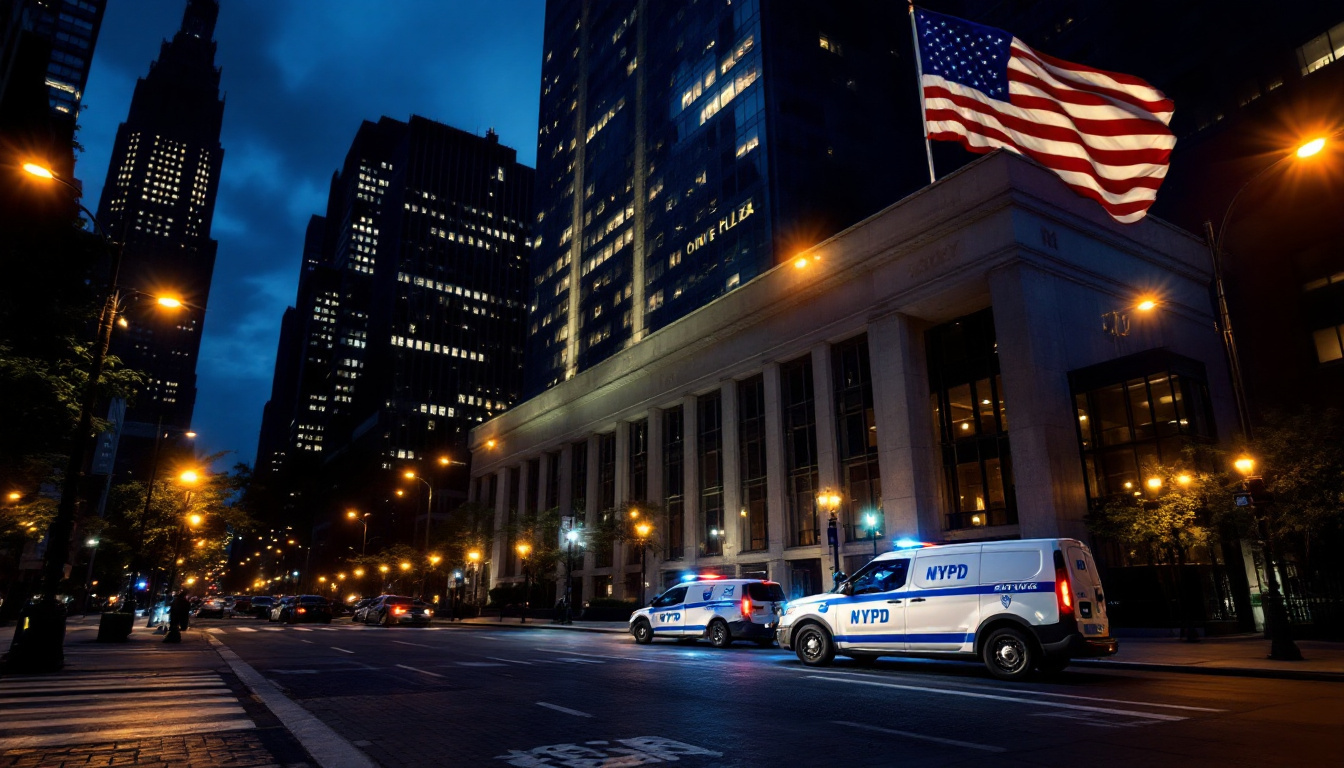
Five hundred NYPD officers tasked with stopping the next terrorist attack on New York City just got reassigned. Mayor Zohran Mamdani announced Saturday that the Strategic Response Group — the unit that merged counterterrorism with rapid deployment — is officially dissolved, its personnel scattered across a newly created "Community Dialogue and De-escalation Division" and something called a "First Amendment Support Team."
The same weekend, U.S. intelligence flagged an active Iranian dirty-bomb plot targeting Washington, D.C.
Mamdani, the Democrat who took office in January, framed the move as a campaign promise kept. "During our campaign, I promised New Yorkers that we would disband the Strategic Response Group and separate counterterrorism from protest response, and today we are delivering on that promise," he said. He'd spent ten months working out the details. Ten months to figure out how to make New York City less prepared for a terrorist attack.
The mayor's reasoning is that protest response and counterterrorism shouldn't overlap. "New Yorkers exercising their constitutional right to protest should not be met with the same police response as a terrorism threat," Mamdani explained. The new policy bans kettling, prohibits tear gas during protests, bars long guns and pepper spray as crowd-management tools, and limits acoustic devices to 90 decibels. Bicycles — yes, police bicycles — are now restricted to "life-safety situations only."
NPD Commissioner Jessica Tisch offered the kind of reassurance that reassures nobody. "I would never compromise on security for New Yorkers," she said, then pivoted to crowd control at basketball games: "Nothing would change about the way that the NYPD responds to crowd control conditions, like, for example, the celebrations following the Knicks' epic championship." When a police commissioner's best example of maintaining public safety is a Knicks parade, the bar has moved.
Scott Munro of the Detectives' Endowment Association was blunter. "When you are in policing, you've got to be proactive, not reactive. And that's what's not happening now. Now we're going backwards."
The organizational chart tells the story. The Counterterrorism Bureau still technically exists as a separate entity, but the 500 SRG officers who gave it operational muscle are gone — rerouted into units whose names sound like they were designed by a university diversity committee. The "Community Dialogue and De-escalation Division" and the "Patrol Support Division" now carry the workload that once belonged to officers trained specifically for rapid counterterror deployment.
Mamdani's defenders will point out that separating protest policing from counterterrorism is a civil-liberties win. The ACLU crowd has pushed this framing for years. But the SRG wasn't just a protest unit — it was the rapid-response backbone that could surge officers to any developing threat in the city. Dismantling it doesn't just change how protests are policed. It changes how fast New York can react when something goes wrong that has nothing to do with a protest sign.
The timing is what elevates this from bad policy to something harder to explain. Iran's regime is under intelligence community scrutiny for an active plot to detonate a radiological device on American soil. The threat briefings are current. The intelligence is live. And New York City — the most obvious high-value target in the Western Hemisphere, the city that buried 2,977 people on a single September morning — just took 500 officers off its counterterror chess board.
Mamdani said the restructuring took ten months because he wanted to "ensure that we could do so in a way that fulfilled the promise and was able to fulfill exactly those responsibilities that we hold." The promise was to activists. The responsibilities are to eight million people who ride the subway, work in skyscrapers, and walk through Times Square assuming someone is watching.
As reported by Breitbart, the announcement landed on November 16 — a Saturday, the classic government news-dump slot. The mayor's office chose the quietest day of the news cycle to announce that New York's counterterror apparatus just lost its operational teeth.
Eight million people. Five hundred fewer officers standing between them and whatever comes next.