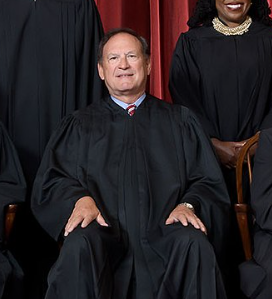
On Tuesday, June 30th, NPR legal affairs correspondent Nina Totenberg rushed out of the Supreme Court and told the entire country that Justice Samuel Alito was retiring. The story went live on NPR's platforms. Media outlets picked it up. The internet caught fire.
One problem. It wasn't true.
Totenberg's explanation, delivered in a written apology to Justice Alito himself, is something you'd expect from a journalism student on her first day — not a reporter with more than 50 years in the business. "I rushed out of the courtroom after the opinion announcements, and when I realized that the usual rush of folks after a few minutes had not happened, I asked somebody what was going on inside, to which the answer was, 'retirement announcements,'" Totenberg wrote. "I didn't hear the 's' on 'announcements,' and I assumed something no reporter should ever do: that you were retiring."
She assumed. A reporter at a taxpayer-funded news organization, covering the highest court in the land, assumed the biggest Supreme Court story of the year based on mishearing a single letter.
Totenberg called it "the worst professional mistake of my more than 50 years in journalism." That's a competitive field, but she's probably right. NPR had a pre-written draft story on an Alito retirement ready to go — standard practice for major outlets — and Totenberg's assumption was all it took to push it live. No second source. No confirmation from Alito's chambers. No checking with the Court's public information office. Just a hallway conversation and a missing consonant.
NPR Executive Editor Krishnadev Calamur issued a statement trying to contain the damage. "We profoundly regret the error and the confusion that this has caused, and Nina has reached out to Alito to apologize personally," Calamur said. The network retracted the story, but by then it had already raced across every newsroom and social media feed in America, as reported by American Wire News.
NPR will frame this as an honest mistake. A veteran reporter misheard something in a chaotic moment. These things happen. And sure, they do — at outlets that don't receive federal funding and don't lecture the rest of us about the sacred importance of verified journalism every time someone questions their credibility.
This is the same NPR that positions itself as the adult in the room. The antidote to misinformation. The network that runs segments about the dangers of unverified reporting on social media while its own correspondent is publishing Supreme Court fan fiction based on a mumbled hallway exchange. The apology letter reads less like accountability and more like a reporter who wanted the story to be true and found the thinnest possible excuse to run with it.
The details matter here. Totenberg didn't report that multiple justices were making retirement announcements — plural, the word she claims she heard. She reported that Alito, specifically, was retiring. That's not a hearing problem. That's an assumption that filled in every gap between a fragment of a sentence and a finished news story, and every gap got filled in the same direction.
"There are no words to adequately apologize for today's error," Totenberg wrote. On that much, we agree. There aren't words, because the error isn't really about mishearing a syllable. It's about a newsroom where the guardrails between "I think I heard something" and "publish it" apparently don't exist when the story is too good to pause on.
Fifty years in journalism, and the lesson is the same one they teach in week one: confirm before you publish. NPR just spent your tax dollars learning it again.