
Kern County District Attorney Cynthia Zimmer says Governor Gavin Newsom "didn't know the names of the defendants or even the names of the victims" when he commuted 548 death sentences in California. Five hundred and forty-eight. Every single condemned inmate in the state — serial killers, child murderers, rapists — moved off death row in one stroke, two days after the midterm elections.
Marc Klaas found out the man who murdered his daughter Polly would never face the needle. After thirty years.
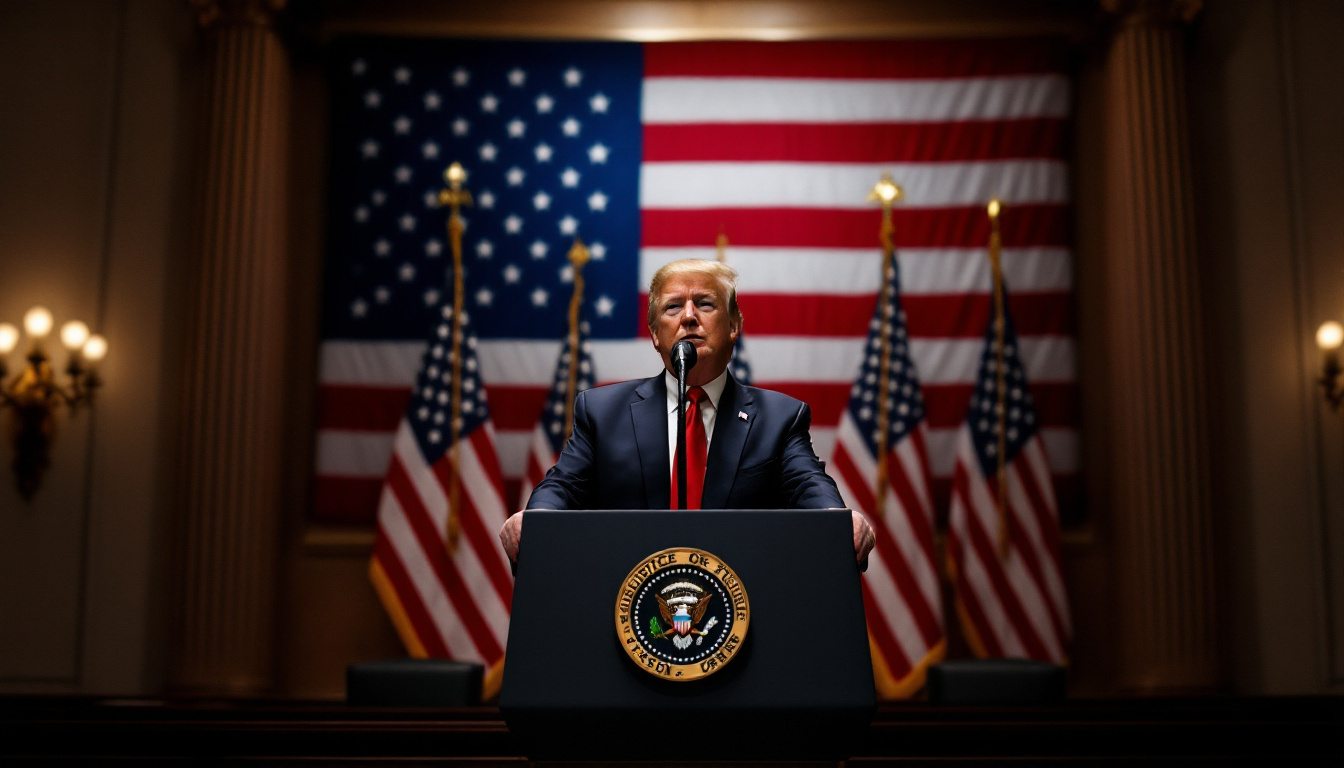
Klaas was in the room Saturday when President Trump held an event at the Justice Department's Great Hall to stand with families of murder victims. He told the crowd what a prosecutor once said to him after Richard Allen Davis was convicted in 1996: "See, you can trust the system. If you work within the system." Klaas called Newsom's mass commutation a "knife in the back" — the system he'd trusted for three decades gutted by a governor who couldn't be bothered to learn the case files.
Trump didn't mince the moment. He called Newsom's action "one of the most shocking acts of injustice our country has ever seen" and said the governor "came along and stole away the only closure those families might ever have." The families in that room, Trump said, will "never, never be the same."
The numbers tell the rest. California voters rejected abolishing the death penalty in 2012. They rejected it again in 2016. Newsom imposed a moratorium on executions in 2019 anyway, and the state hasn't carried one out since 2006. The voters said keep it. Newsom said no. Twenty years of democratic will overridden by one man who, according to Zimmer, didn't do the reading.
The White House released a list of 20 of the most notorious killers whose sentences Newsom erased. Randy Kraft, convicted of 16 murders. Charles Ng, who killed 11 people including two babies. Marcus Wesson, who murdered nine of his own family members in Fresno in 2004. Bob Williams, convicted of rape and murder in Bakersfield in 1994. These aren't edge cases or wrongful-conviction candidates. These are the names Newsom reportedly never learned before he signed the paperwork.
Of the 548 commutations, 382 still require California Supreme Court approval before taking effect — a procedural step, not a meaningful check. Roughly 70% of the condemned inmates meet what the state classifies as a multiple-felony condition, meaning they weren't convicted of a single crime in a moment of despair. They were repeat offenders who kept going.
The White House statement said Newsom "must stop playing politics with public safety." That framing is generous. Playing politics implies a calculation that benefits someone. Newsom waited until two days after the midterms to drop the commutations, which suggests he knew exactly how the public would react. He just didn't want it on the ballot.
While Newsom was emptying California's death row, the Trump administration was moving in the opposite direction. The Department of Justice has sought the death penalty 49 times since Trump signed his Inauguration Day order in January 2025, with 44 federal defendants authorized for capital sentences. Trump signed a new directive in November 2026 specifically targeting murderers of children, rapists, and traffickers. "Capital punishment will be swift and certain," Trump said. Rep. Brandon Gill, Republican of Texas, introduced the "Just Punishment for Murder Act" to reinforce that federal framework.
So the contrast sat right there in the Justice Department's Great Hall on Saturday. On one side, a president standing next to the families who buried their children, their sisters, their parents. On the other, a governor three thousand miles away who freed 548 killers without learning a single victim's name.
The prosecutor told Marc Klaas to trust the system. Gavin Newsom was the system.