
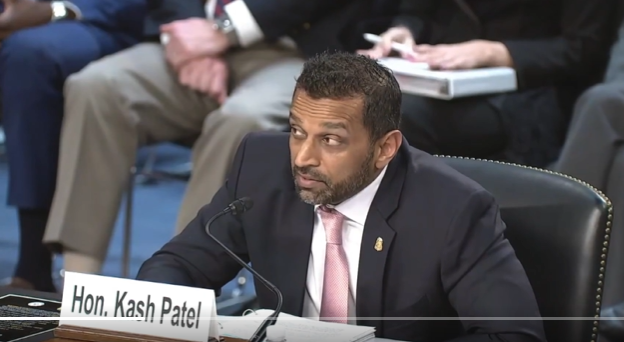
FBI Director Kash Patel walked into the Senate Judiciary Committee on Monday armed with a 9.3% drop in violent crime and a $250 million defamation lawsuit. He walked out nearly five hours later with both intact.
The Democrats walked out with nothing.
The hearing was supposed to be an oversight exercise. Senate Judiciary Committee Ranking Member Dick Durbin had other plans. Durbin opened by accusing Patel of orchestrating a "cover-up of the Epstein files" — a claim that landed with the subtlety of a campaign ad and the evidentiary weight of one too. Senator Richard Blumenthal demanded an "unequivocal, clear, unambiguous commitment" that the FBI would stay out of election interference. Senator Peter Welch tried a different angle, citing Michigan governor candidate John James's podcast claim that Patel had promised FBI presence near polling places in West Michigan and Southeast Michigan ahead of Election Day.
Patel's response to Welch set the tone for the entire afternoon. "I have pledged unequivocally that I will not participate in your charade of lies," Patel said. He then calmly noted that the FBI maintains election crimes community coordinators in all 56 field offices — a structure that predates his tenure and exists specifically to monitor election interference. The distinction between monitoring election crimes and interfering in elections apparently escaped the committee's Democratic members.
Blumenthal declared himself "dissatisfied" that Patel wouldn't deliver the scripted soundbite Democrats wanted. Being dissatisfied with an FBI director who won't perform for your cameras isn't an oversight finding. It's a confession that the hearing wasn't about oversight.
Durbin's Epstein gambit deserves special attention. The same senator who sat on the Judiciary Committee for years while the Epstein case languished under previous FBI leadership now frames the current director as the obstacle to transparency. Patel has a ten-year confirmed term. Durbin has subpoena power. If the ranking member believed a cover-up was underway, the procedural tools are sitting right there on his desk. He reached for the microphone instead.
Then came the Atlantic allegations — a May 2026 report claiming Patel had "bouts of excessive drinking" and job performance problems. Patel's answer was flat: "I have never been intoxicated on the job." His follow-up was less flat: a $250 million defamation lawsuit filed against The Atlantic. Democrats referenced the article repeatedly during the hearing, which is a bold strategy when the subject of the article is actively suing the publication for making it up.
Meanwhile, the numbers Patel brought to the table went largely uncontested. Violent crime down 9.3% from 2024 to 2025. Violent crime arrests up 90%. Violent gang member arrests up 31%. Patel called it "the most prolific run of crime reduction in history." No senator on either side offered a competing statistic.
The hearing also touched on the FBI's updated hiring standards — specifically, a policy change that no longer automatically disqualifies applicants with certain personal histories, including prostitution and bestiality, instead evaluating cases individually. Democrats raised it as a scandal. The policy details suggest the change addresses situations involving victimization rather than criminal conduct, but the headline writes itself either way.
The math on Patel's position hasn't changed since his confirmation. He holds a ten-year term. Removing him requires presidential action or impeachment. Democrats demanded his "immediate" replacement on Monday despite lacking the authority to make that happen through any procedural mechanism available to them.
Five hours of questions. Zero new facts established. One $250 million lawsuit still pending. The FBI director's chair was occupied when the hearing started and occupied by the same person when it ended.