
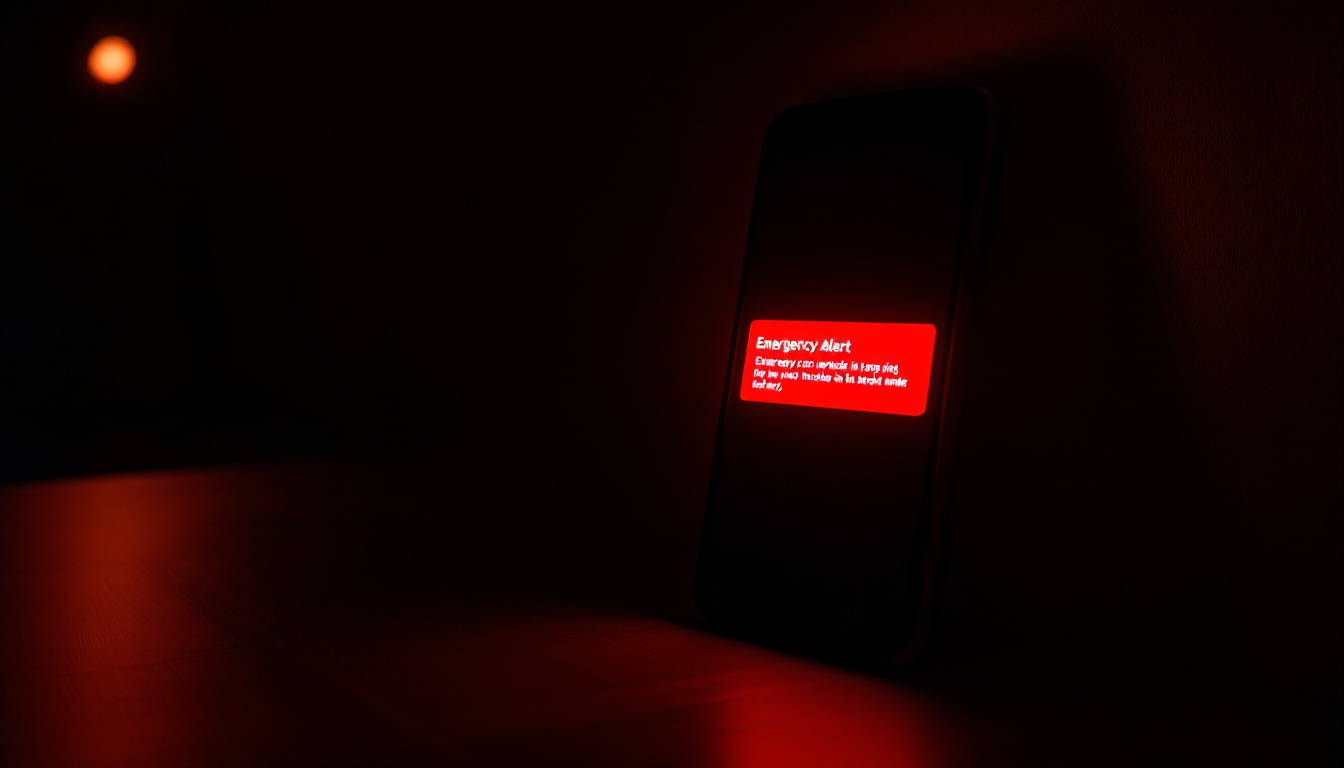
Just before 11 p.m. on November 1, millions of Ukrainian phones lit up with an alert: Russia had launched a hypersonic Oreshnik missile — capable of carrying a nuclear warhead — and a nuclear alert had been declared for Kyiv. Radiation warnings followed. Then chemical threat notifications. Then warnings of street fighting in the capital.
None of it was real.
The Air Alert app — Ukraine's nationwide early-warning system used by 6.6 million active users to survive daily Russian bombardment — had been hacked. The Ukrainian Air Force confirmed the breach on Telegram, stating that "the air alert app appears to have been subjected to enemy influence," and urging citizens: "There is no radiation threat! Stay calm and follow our updates on our channel!"
The app was built in 2022, shortly after Russia's full-scale invasion, as a collaboration between Ukraine's Ministry of Digital Transformation and Ajax Systems, a Ukrainian security technology company. It pushes real-time alerts when Russian missiles, drones, or aircraft threaten specific regions. For four years, it has been the digital lifeline between the Ukrainian military and the civilian population trying not to die.
Someone turned that lifeline into a psychological weapon. The fake alerts — broadcast in Russian — included fabricated warnings about Oreshnik missile deployment, radiation contamination, chemical attacks, and armed combat in Kyiv's streets. Ukraine's state Centre for Strategic Communications, known as SPRAVDI, blamed Russia for the cyberattack. Air Force spokesman Yurii Ihnat said the breach had no effect on military security operations and stressed that the app is not part of military command systems.
The timing deserves its own paragraph. The hack came minutes after the expiration of a truce between Moscow and Kyiv in the eastern Kherson region. A ceasefire ends, and within minutes, millions of civilians get fake nuclear attack warnings on the app they depend on to stay alive. Draw your own conclusions.
Ajax Systems responded by disabling push notifications and temporarily suspending the service entirely. Ukraine's Ministry for Digital Transformation confirmed other alerting systems, including air raid sirens, remained operational. Few people appear to have actually believed the false messages — Ukrainians have become grimly experienced at distinguishing real threats from noise after four years of war.
Then the story got stranger. A group calling itself DC8044, which describes itself as an independent Kyiv-based cybersecurity community, along with another group called Hitcore Corp, claimed they breached the app through its programming interface. Hours later, Russia's own emergency app — operated by the Ministry of Emergency Situations, known as EMERCOM — came under what Moscow called a "massive cyberattack," with Russian users receiving their own fake warnings about an imminent nuclear strike.
So in the span of one evening, both sides of the war had their civilian emergency systems compromised. The apps that millions of people in active conflict zones rely on to know whether a missile is about to hit their apartment building became tools for spreading panic instead of preventing it.
The United States has sent tens of billions in aid to Ukraine since 2022. The fundamental digital infrastructure that keeps Ukrainian civilians informed about incoming threats — an app, with a programming interface apparently vulnerable enough for a self-described cybersecurity community to waltz through — got hijacked to simulate a nuclear attack on Kyiv.
The alerts were fake. The vulnerability was real. And 6.6 million people just learned that the app between them and a Russian missile might not always be on their side.