
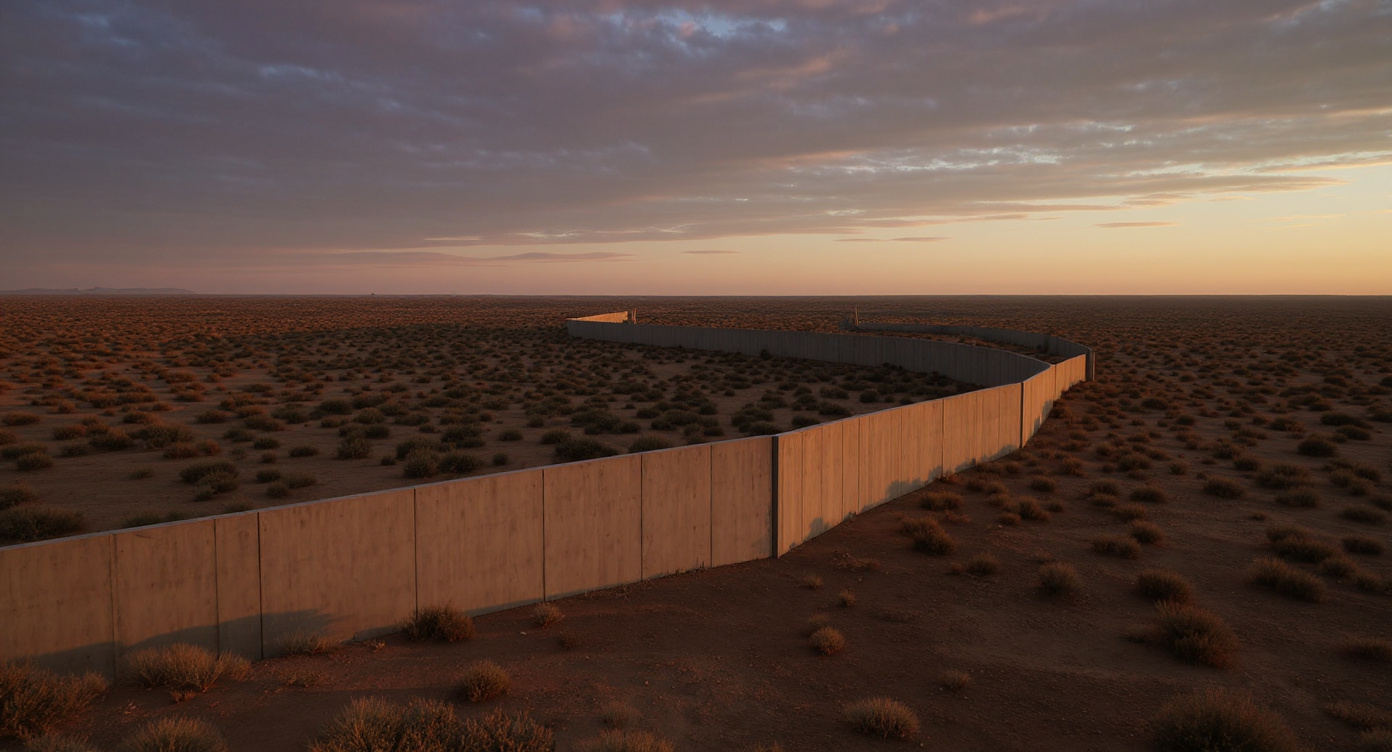
Fourteen consecutive months. Not fourteen months of reduced releases. Not fourteen months of improved processing times. Fourteen months where U.S. Border Patrol released exactly zero migrants at the southern border.
That's not a typo. That's a historic streak no prior administration came close to achieving.
In June 2026, Border Patrol apprehended 9,848 people at the southwest border — 94 percent lower than the monthly average under the Biden administration. To put that in perspective: that single-month total is lower than the number of people Border Patrol was apprehending in four days in June 2024. The entire month now fits inside what used to be a long weekend.
"Leadership and policy matter," CBP Commissioner Rodney S. Scott said in the agency's July 16 statement. "When laws are enforced, fewer people will break the law."
Remember the parade of experts who told us this couldn't be done? The think-tank fellows who explained, very patiently, that the volume was simply too high? The cable-news pundits who insisted that zero releases was a "fantasy" pushed by people who "don't understand how immigration law works"?
They understood just fine. They just lacked the will to do it.
The policy mechanics aren't complicated. Remain in Mexico agreements. Expedited removal. Adequate detention capacity funded by a Congress that finally stopped playing games with DHS appropriations. The tools existed for decades. Previous administrations chose not to use them — or actively dismantled them.
Under Biden, Border Patrol processed and released hundreds of thousands of migrants annually into the interior, often with nothing more than a notice to appear at a court date years in the future. The honor system, except nobody honored it. Under Trump, the answer became simple: you cross illegally, you don't get released into the country. Period.
Critics will note that apprehension numbers have dropped — suggesting fewer people are attempting the crossing in the first place. That's not a counterargument. That's the point. Deterrence works. When word spreads through migrant networks that crossing no longer results in a bus ticket to a sanctuary city, fewer people pay the cartels $8,000 for the trip.
Not everyone is celebrating. Sen. Tammy Duckworth (D-IL) called the Secure America Act — the legislation Trump signed last month providing $70 billion to ICE and Border Patrol — a "disastrous bill" to "bankroll ICE and Border Patrol's reign of terror." She said it while the southern border sits at the lowest crossing numbers in recorded history.
The $70 billion isn't just a number. It's a lock. The Secure America Act funds Border Patrol and ICE through September 2029 — beyond Trump's current term — meaning the next administration would have to actively dismantle the funding structure to reverse what's been built. House Speaker Mike Johnson said it plainly: Democrats will not be able to defund Border Patrol and ICE for the next few years.
Meanwhile, CBP reports 21,471 Border Patrol agents now serving on the front lines — the highest headcount in the agency's 102-year history. The One Big Beautiful Bill Act, signed by Trump last year, is credited with fueling increased applicant interest and enabling the agency to attract top talent.
The humanitarian-industrial complex that built careers on managing the crisis rather than solving it has gone conspicuously quiet. No press conferences from the ACLU about "inhumane" policies. No breathless CNN segments about "kids in cages." When the cages are empty because nobody's being processed into them, the talking point evaporates.
Fourteen months ago, the number hit zero for the first time. Every month since, it stayed there. The border didn't secure itself. Someone had to decide it was going to be secured, then follow through every single day for over a year.
Turns out the impossible just needed someone willing to do it.