When COVID shut the country down, Washington set up emergency loans to keep American organizations alive. One nonprofit that pushes for limits on immigration applied through TD Bank, and TD turned it down.
According to federal regulators, the denial was influenced by a "hate group" label the Southern Poverty Law Center had slapped on the group. In the middle of a national emergency, a left-wing activist group's blacklist was helping a bank decide who got relief.
That's one entry in a 47-page federal report confirming what half the country has known for years.
The Office of the Comptroller of the Currency released "Guaranteeing Fair Banking for All Americans" on October 14, and it drops the receipts on nine of the largest banks in the country. President Trump ordered the investigation under his executive order of the same name. Investigators went through nearly 100,000 complaints and about 420,000 pages of internal bank documents covering 2020 through September 2025.
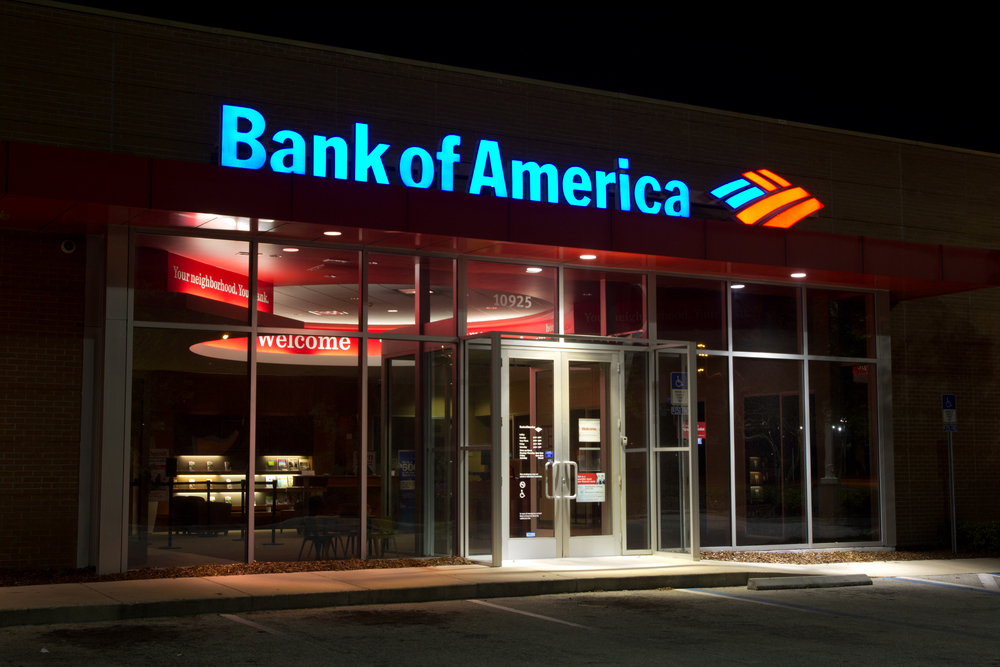
All nine banks kept policies during those years that cut off or restricted customers over their political, religious, or social views, or over perfectly lawful business. The nine are JPMorgan Chase, Bank of America, Citibank, Wells Fargo, U.S. Bank, Capital One, PNC Bank, TD Bank, and BMO Bank.
The weapon of choice was "reputation risk." It was conveniently vague, and it let banks turn away customers who posed no financial risk at all, as long as serving them might draw angry headlines or protesters.
Coal miners got cut off, along with firearms makers and retailers, oil and gas producers, tobacco and e-cigarette companies, digital-asset businesses, and the companies that build and run detention facilities. If an industry made progressives uncomfortable, the banks found a reason to say no.
Wells Fargo even wrote down why. "Under the Biden administration, banks could face greater supervisory pressure to move away from lending to the firearms industry," one review warned. Wells Fargo turned down the gun businesses.
Other banks went further and wrote their own gun laws. Firearms businesses that wanted financing had to follow bank-imposed limits on magazine capacity and on sales to customers under 21. Congress never passed those rules. The banks enforced them anyway.
JPMorgan Chase repeatedly turned away a conservative-leaning retailer from 2021 to 2023. Its internal documents described the retailer's customers as "extreme clients." A bank employee suggested that if "more far-right competitor[s]" took those customers off the retailer's hands, the company "may become more mainstream and more appropriate for JPM to bank."
So the retailer could get a bank account once it was rid of the wrong kind of customers.
Christians were on the list too. PNC refused credit to a media company after noting that an owner's foundation "has funded several Christian conservative groups." Wells Fargo pressured a payment processor to drop a religious nonprofit over its position on same-sex marriage. JPMorgan's payment business flagged "MAGA," "Make America Great," and "America First" as warning signs.
The banks were tracking customers' politics down to the decimal. When Capital One rejected an organization that supported abortion rights, a risk employee wrote that the group's "[c]ontributions to politicians are about 95% Democrat."
The banks' defenders will point to that one and say the system cut both ways. What it shows is that the banks were profiling customers by party. Look at the rest of the list: gun shops, coal companies, Christian ministries, MAGA merchandise sellers, a border-security nonprofit during a pandemic, and a retailer with "extreme clients." In those years, anyone to the right of a Sierra Club donation page was a risk.
Comptroller Jonathan V. Gould, appearing in Lexington, Kentucky with Republican Senate nominee Andy Barr, said: "Americans should have access to financial services regardless of their beliefs, affiliations or political views."
Gould also made clear the banks haven't earned the benefit of the doubt. "Notwithstanding certain efforts by the largest banks to rein in these practices, I am not confident that they will be enough," he said.
The Trump administration has already ripped "reputation risk" out of the OCC's supervisory rulebook, so federal regulators can no longer use it to lean on banks to drop disfavored customers. The OCC says it is weighing further changes "to reduce the likelihood of these harmful practices recurring in the future."
Acting CFPB Director Mark Paoletta announced his bureau will investigate whether these banks broke federal consumer finance laws. He didn't hedge about who was responsible. "It is appalling that these banks targeted American consumers for their political, social, or religious beliefs that did not align with the Biden Administration or its leftist allies," Paoletta said. "These thuggish tactics, which were also a defining feature of the Biden-Chopra CFPB, have no place in America."
JPMorgan's response insisted its policies prohibit discrimination and dismissed the report as "a limited number of historical interactions." Then it agreed with the administration "on a broader point: years of operating in a regulatory environment that often second-guessed decisions contributed to a culture of caution across the banking industry. That system needs fixing."
America's biggest bank wants credit for spotting the problem in its own house. The Biden regulators created the climate, and JPMorgan's own employees wrote "extreme clients" into the file.
Penalties haven't been announced — yet. The OCC is weighing its next move, and the CFPB investigation is just getting started.
Gun store owners, coal miners, and Christian ministry leaders could have told anyone who asked what was happening back in 2021. Now there are 420,000 pages of the banks' own documents backing them up.