
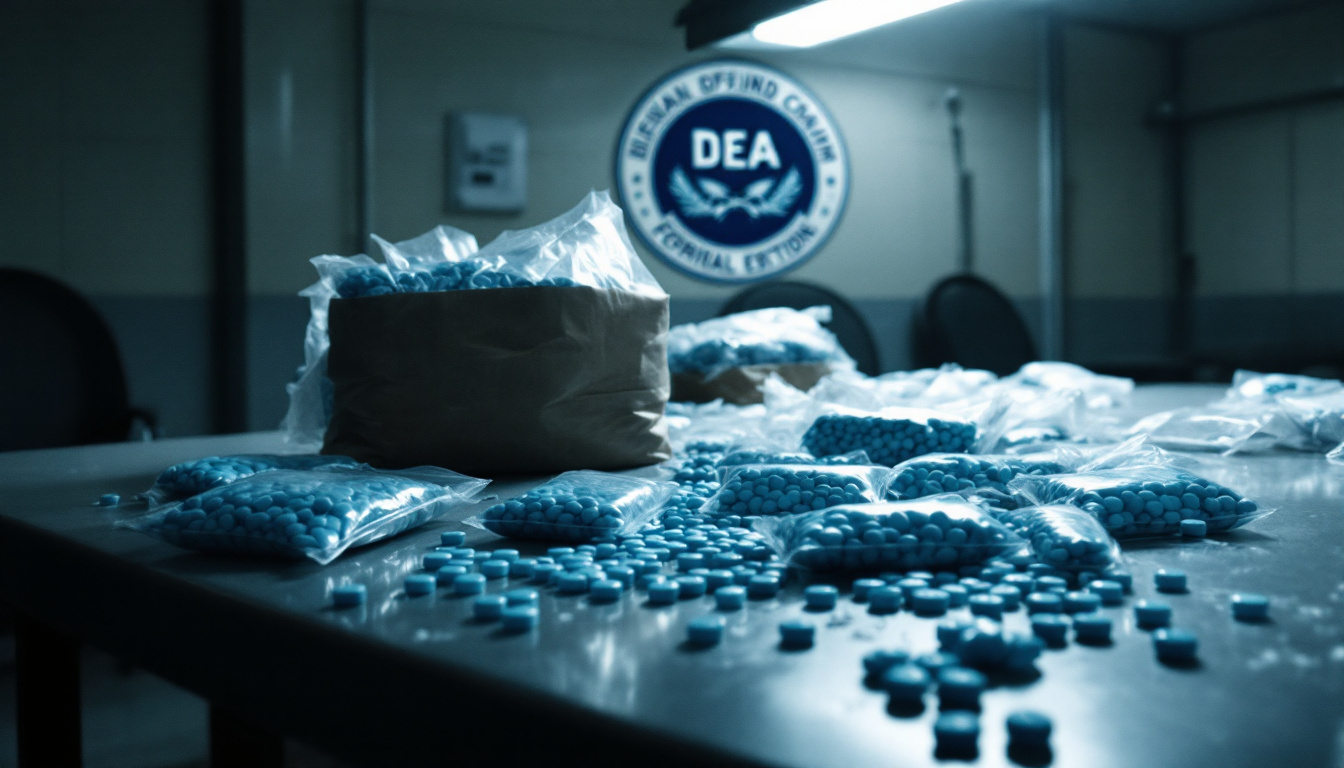
In April 2023, DEA agents in Albuquerque pulled over a car tied to a fentanyl investigation. Inside were fentanyl pills, a loaded gun and an elementary-school-aged child.
The agents seized the drugs and the gun and got the kid away from both.
Their supervisors reprimanded them.
According to Special Agent David Howell, a 20-year DEA veteran who worked that case, his bosses suggested the child may have been traumatized by the traffic stop.
So the child had been riding around with fentanyl and a loaded gun, and the DEA was worried the traffic stop upset him.
Howell has spent three years trying to get someone to listen. This week, in his first television interview, with CBS News, he put it bluntly: "We poisoned our community to make cases."
The tactic has a name. Agents let the drugs "walk." Instead of seizing a fentanyl shipment they know is coming, they watch it go by and hope it leads them to someone bigger.
If that sounds familiar, it should. In Operation Fast and Furious, federal agents let about 2,000 guns walk to Mexican cartels so they could "track" them. It ended with a murdered Border Patrol agent, Brian Terry, and a congressional scandal. Somebody at the DEA apparently decided to try the same thing with fentanyl.
In Albuquerque, according to an internal DEA report, agents knew a 74,000-pill fentanyl delivery was headed for a mobile home park and didn't stop it. Howell says the people tied to it sold the pills that night. When he objected, his supervisors told him: "The investigation comes first."
Any one of those pills can kill. That night, 74,000 of them hit the streets.
A second whistleblower says agents watched a courier make run after run from Phoenix to Albuquerque in 2022 and 2023, an estimated 50,000 to 100,000 pills a trip, and let him keep driving.
The investigation came first.
In a 2024 wiretap case, agents learned of 350,000 pills and didn't seize them. Across one multistate investigation, records cited in reports show agents allowed at least 1.8 million fentanyl pills to be delivered in 2024 and 2025.
The investigation came first.
Alex Uballez, the Biden-appointed U.S. Attorney for New Mexico from 2022 to 2025, defended the strategy: "The bigger fish are worth catching, and that will save more lives."
Picture a lifeguard who lets swimmers go under because he's waiting to catch the shark. That's the plan.
New Mexico paid for it. While fentanyl overdose deaths fell 14% nationwide last year, New Mexico's climbed 21%. In Española, a 15-month-old child died.
Howell did everything a whistleblower is supposed to do. He warned his managers. In August 2023, he filed a formal complaint with the Justice Department's Inspector General, then went to the Office of Special Counsel and the Office of Professional Responsibility.
For his trouble, he was shipped to El Paso, pulled off active cases, given worse performance reviews and denied surveillance equipment. One of the DEA's most experienced agents now does surveillance with the same iPhone you use to order a pizza. The agency still won't let New Mexico state investigators interview him.
"We did nothing but sit back and watch," Howell said.
None of this was an accident of the rules. In 2017, President Trump's Justice Department required agents to "seize or otherwise prevent the distribution" of fentanyl "as soon as practicable." In June 2024, Joe Biden's Justice Department rewrote the rules to give agents and prosecutors more "discretion." It was the same government whose DEA was running a "One Pill Can Kill" ad campaign while its agents watched hundreds of thousands of those pills go by.
Things are changing now. Trump's DEA administrator, Terrance Cole, asked the Justice Department's Inspector General to investigate, including how the agency treated Howell's complaint. Inspector General Don Berthiaume opened a review that could show whether the same thing happened in other cities. The Trump White House designated fentanyl a weapon of mass destruction. Even New Mexico's Democratic attorney general, Raúl Torrez, has sued the federal government over it.
The DEA's official line is that "public descriptions suggesting that DEA knowingly permitted fentanyl to reach communities are false." Its own internal report on the 74,000-pill delivery says otherwise.
"It's outrageous to put that many lives at risk in hopes of making a big case," said Tristan Leavitt of Empower Oversight, which represents Howell. His group wants the 2017 rule back: seize the fentanyl.
In May 2025, Attorney General Pam Bondi announced the largest fentanyl seizure in DEA history, more than 3 million pills. It came out of that 2024 wiretap case, the one where agents had already let 350,000 pills go.
David Howell pulled fentanyl and a loaded gun out of a car with a child inside. His bosses worried the kid was traumatized.
Nobody seemed worried about the 74,000 pills that went out that night.