
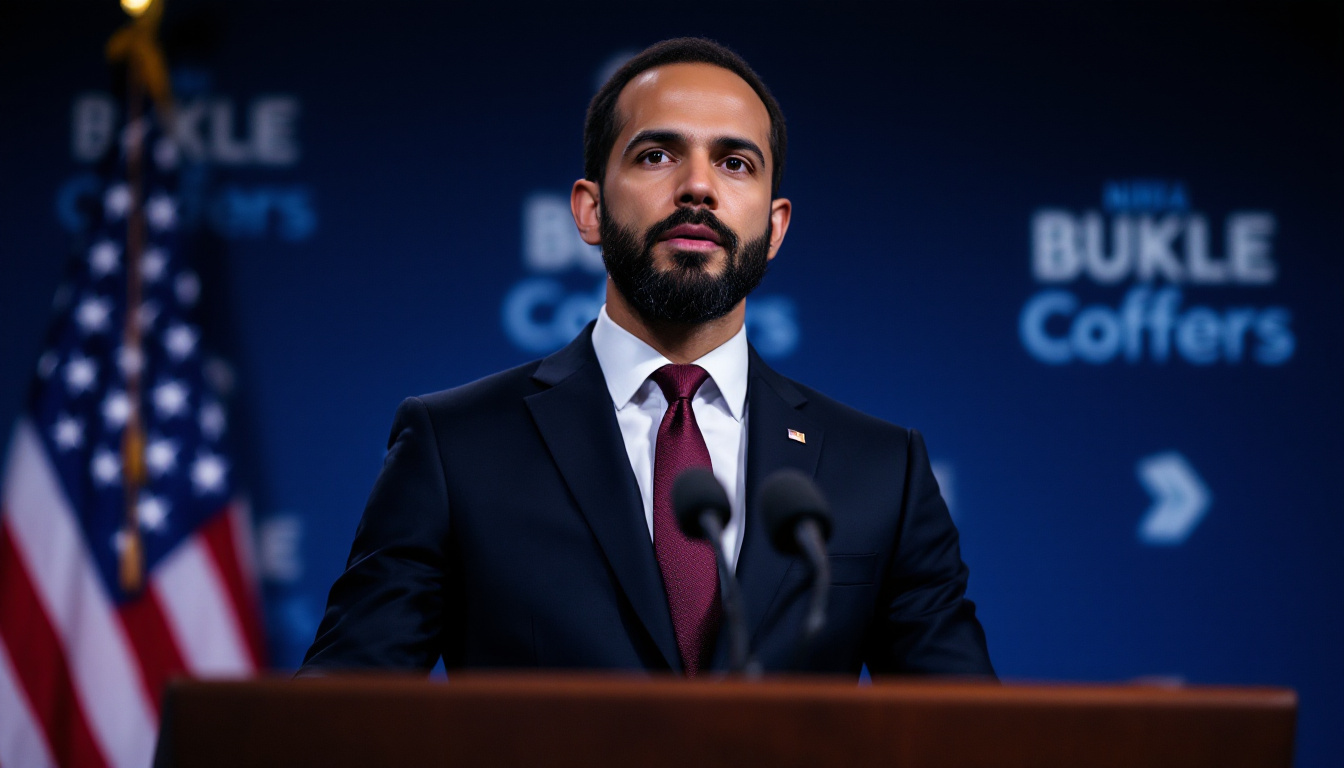
El Salvador's President Nayib Bukele ordered airstrikes on the headquarters of Wilson Joseph — known as "Lanmò San Jou" — the leader of Haiti's largest criminal gang, the 400 Mawozo. The strikes came after four Salvadoran nationals went missing following an October 18 ambush, part of a wave of gang violence that killed more than 5,000 people in Haiti in 2025 alone.
Then Amnesty International weighed in. That went poorly for them.
Amnesty International USA posted on X demanding that leaders "must ensure that all operations conducted by Salvadoran forces in Haiti comply with international human rights law." Standard boilerplate from an organization that has built a cottage industry out of scolding the people actually doing something about gang violence while staying conspicuously silent about the gangs themselves.
Bukele's response was one word: "Ratioed."
The post racked up 3.7 million views, 9,500 replies, and 2,000 likes — while Amnesty's original demand sat there collecting dust and community notes. One of those community notes pointed out that gang violence caused "more than 5,000 deaths in 2025 alone, without any warnings or condemnation by Amnesty International." The internet did the fact-checking Amnesty apparently couldn't be bothered to do on itself.
As reported by Townhall, the airstrikes targeted the 400 Mawozo compound — a gang best known for kidnapping for ransom. Haitian Prime Minister Alix Didier Fils-Aimé backed the operation, posting on X in terms that don't leave much room for diplomatic ambiguity: "THE GANGS WILL GET NO SLEEP!"
The broader operation involves a UN-backed Gang Suppression Force, the GSF, working alongside Salvadoran forces to dismantle gang infrastructure in a country where the government lost effective control of entire neighborhoods years ago. Bukele's involvement traces directly to those four missing Salvadorans — this isn't abstract foreign policy. It's a leader protecting his citizens with the tools that actually work.
Amnesty International's complaint assumes a moral framework where airstriking a kidnapping syndicate's headquarters requires the same procedural hand-wringing as a zoning dispute. The 5,000 dead Haitians who didn't get an Amnesty International press release might see the calculus differently. The organization managed to stay quiet through an entire year of mass murder, then found its voice the moment someone started fighting back.
Bukele built his entire domestic record on this exact model — crushing MS-13 in El Salvador while human rights organizations issued stern letters from comfortable offices. The results weren't subtle. El Salvador went from one of the highest murder rates in the Western Hemisphere to one of the lowest. The stern letters continued. The murders didn't.
Now he's exporting the approach to Haiti at the Haitian government's invitation, and Amnesty International is running the same playbook: ignore the violence, scold the response. It worked about as well as you'd expect from an organization that just got ratio'd into the sun by a sitting head of state.
More than 5,000 dead in one year. One word in reply to the people who noticed only when the shooting stopped being one-sided.