
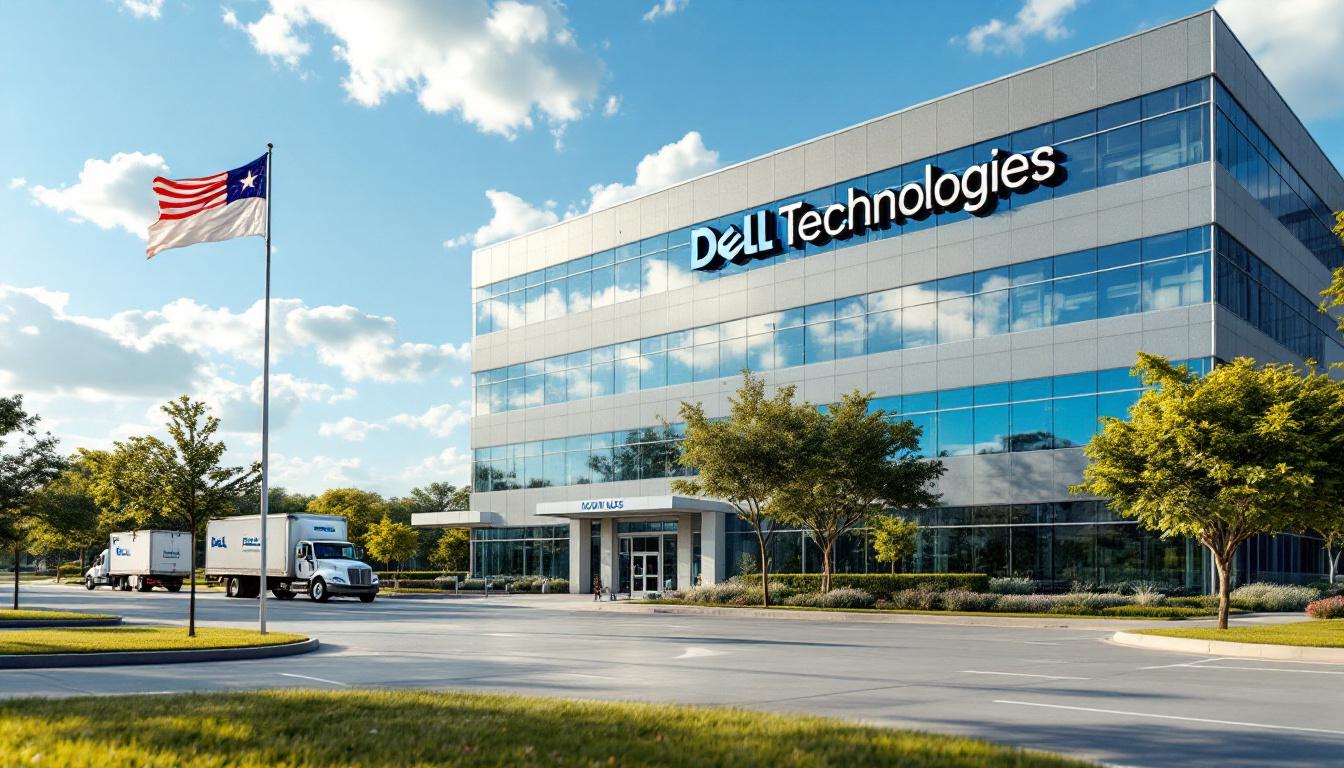
Dell Technologies — the $137 billion tech giant that Michael Dell literally built from his dorm room at the University of Texas in 1984 — just told Delaware to pack its bags. The board voted unanimously on May 4th to relocate the company to Texas, where its headquarters, its CEO, and the largest chunk of its American workforce have been sitting this entire time.
So let us get this straight: Dell was legally incorporated in Delaware — a state whose biggest contribution to American commerce is being a toll booth on I-95 — while the actual company was built, run, and headquartered in Round Rock, Texas. That’s like listing your home address as your ex’s apartment even though you moved out four years ago. Glad they finally updated the paperwork.
Michael Dell put it perfectly: “From my dorm room at the University of Texas in 1984 to our headquarters today in Round Rock, Texas has given Dell what every great company needs to grow — extraordinary talent, world-class research universities, and a business environment that lets us build for the long term.” Translation: Texas doesn’t treat successful companies like criminals. Revolutionary concept, we know.
Governor Abbott’s response was chef’s kiss: “Welcome home, Dell.” Four words. No 47-page press release. No committee hearing. No diversity impact study. Just “welcome home.” That’s how you run a state.
Now here’s where it gets fun. We’ve been keeping a running scoreboard of companies fleeing blue states for Texas, and folks, the list is getting so long we might need a bigger whiteboard.
ExxonMobil — the largest oil company on planet Earth — announced in March that it’s ditching New Jersey. Coinbase bailed. Tesla moved years ago (Elon saw the writing on the wall before anyone). Dropbox, TripAdvisor, Simon Property Group, The Trade Desk, Dillard’s, eXp World Holdings — all either already redomesticated to Texas or have proposals pending.
According to Ryan Patrick, CEO of Texans for Lawsuit Reform, over 250 companies have physically relocated their headquarters to Texas since 2019. Two hundred and fifty. That’s not a trend, that’s a stampede. Even Jamie Dimon — the CEO of JPMorgan Chase — called it a “fairly large exodus” and said it’s not about loyalty, it’s about math.
And what’s the math? No state income tax. A brand-new Business Court that Texas created in 2024 specifically to handle complex corporate cases — offering what Dell’s board called “a more consistent legal framework, predictability, efficiency and protections for shareholders.” You know, all the things Delaware used to brag about before their courts started treating every shareholder lawsuit like a lottery ticket.
Delaware has been the default incorporation state for American corporations since roughly forever. It was the go-to because their Chancery Court was supposed to be the gold standard of corporate law. Well, congratulations Delaware — you had one job, and you managed to screw it up so badly that Fortune 500 companies are literally changing their legal addresses to get away from you.
(That’s like being the only bar in a small town and STILL losing customers. Impressive, honestly.)
The shareholders will vote on the move at Dell’s annual meeting on June 25th. Dell confirmed that the redomestication won’t affect business operations, management, strategy, assets, or where employees work. Nothing changes except which state gets to put “home of Dell Technologies” on their welcome sign. Spoiler: it’s the one without an income tax.
We should really start sending thank-you cards to the governors of California, New York, New Jersey, and Delaware. Without their suffocating regulations, insane tax rates, and lawsuit-happy court systems, Texas wouldn’t be experiencing the greatest corporate migration since the Oklahoma Land Rush.
Seriously — blue state governors are doing more to grow Texas’s economy than the Texas legislature at this point. Gavin Newsom alone has probably driven more Fortune 500 companies to Austin than any economic development office in history. Somebody give that man an honorary Texas belt buckle.
The pattern is so obvious now that even a second-grader could spot it: companies go where they’re welcome, where the taxes are low, where the courts are predictable, and where the government doesn’t treat every quarterly earnings call like a crime scene. Texas checks every box. Delaware, California, and New Jersey check exactly zero.
So welcome home, Dell. Grab a spot next to Exxon, Tesla, and the rest of the gang. The scoreboard in the Lone Star State just keeps growing — and we’re going to need a bigger wall to hang it on.